

A growing business in Dubai needs more than computers, internet access, and basic software. As teams expand and operations become increasingly digital, companies need reliable systems for communication, data protection, cloud access, cybersecurity, networking, and technical support. Choosing the right IT solutions for businesses in Dubai helps organisations build a secure and scalable technology environment without investing in unnecessary tools.

Quick Answer:  A growing business typically needs secure IT infrastructure, reliable network infrastructure, cloud computing, cybersecurity, data backup, disaster recovery, Microsoft 365, proactive IT monitoring, and responsive IT support. The right combination depends on the company’s size, industry, number of employees, remote-working requirements, data sensitivity, and growth plans.

Why Growing Businesses in Dubai Need Better IT Infrastructure

Dubai’s business landscape is very competitive and technology plays an integral role in daily work processes. Digital systems are essential to businesses, whether it’s for customer communication, accounting, project management, or data storage.

As a company grows its technology needs evolve as well. At first, a small team might be able to use a few laptops, share files and utilize basic software. But employees, offices, applications, customers and data adds up quickly, however, and that can create complexity.

Regardless of how well the technology is managed, it can lead to downtime, security issues, network speed issues, data loss, and productivity problems. By investing in appropriate IT infrastructure Dubai business can rely on, then companies can build a solid technology base before these issues become costly.

Reliable Network Infrastructure

Stable network is one of the pillars of a modern business. Workers must have instant and reliable access to applications, clouds, shared resources, communication tools and business information.

The ideal network should have secure Wi-Fi, the right switches and routers, firewall protection, structured connectivity and access controls. For enterprises that have multiple departments or sites, solutions that isolate sensitive systems and handle traffic efficiently are also necessary.

As employee numbers increase, network requirements should be reviewed regularly. A network that worked for ten employees may not deliver the same performance for fifty.

Cloud Computing for Flexibility and Scalability

With Cloud Computing, businesses can use applications, files, and services while they’re not 100% in the office. Cloud-based systems can also simplify the process of adding users, working remotely, collaborating between sites and scaling technology as the business expands for growing companies.

Cloud services can also help to minimize reliance on personal office equipment. Rather than storing sensitive data on a single computer, companies can opt for a secure cloud-based system that has a controlled access and proper backup system in place.

Microsoft 365 for Business Productivity

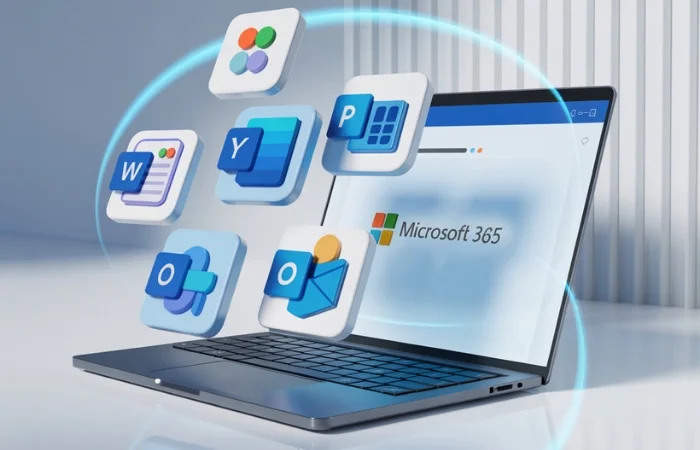
Organizations can use Microsoft 365 to streamline communication, collaboration, document management and productivity in a single place for many organizations.

Outlook, Teams, OneDrive, and SharePoint are tools that enable employees to communicate and collaborate with files from various locations. But buying licenses is not sufficient, enough.

Businesses also require correct user management, security settings, access controls and device policies and continuous administration. Organizations can gain more value from their investment in Microsoft 365 and avert unnecessary security and productivity problems with effective implementation.

Cybersecurity That Grows With the Business

Cybersecurity should not be treated as something a business needs only after experiencing an attack. As companies grow, they become responsible for more accounts, devices, applications, customer information, and business data.

A practical cybersecurity strategy can include endpoint protection, firewalls, multi-factor authentication, access management, email security, security awareness, patch management, and regular monitoring.

The objective is not simply to install security software. Businesses need multiple layers of protection because different threats can target different parts of their technology environment.

Data Backup and Disaster Recovery

Data is among the most valuable assets of a modern organisation. Losing financial information, customer records, project files, or operational data can seriously disrupt business activities.

Data Backup provides copies of important information that can be restored when necessary. However, businesses should also consider Disaster Recovery — the wider process of restoring systems and operations after incidents such as hardware failure, cyberattacks, accidental deletion, or other disruptions.

A good strategy should define what data needs to be protected, how frequently it should be backed up, where copies should be stored, and how quickly systems need to be restored.

Proactive IT Monitoring

Many businesses wait until something stops working before contacting technical support. This reactive approach can result in unnecessary downtime and productivity losses.

IT Monitoring offers a more proactive way of looking after systems, devices, networks, and other critical elements in case of any issues.

If the early signs of unusual use, performance, hardware issues, storage space shortages, or others can be detected, they can be resolved before they become significant disruptions. Monitoring in a proactive way can then be a vital aspect of technology reliability for an expanding organization.

IT Support for Employees

It doesn’t matter how well the technology is designed, but when there are technical problems employee can create problems. A user might not have access to an application, be able to connect to the network, set up a device, retrieve a password, or solve an unfamiliar problem.

Reliable IT support for businesses gives employees a dedicated resource for resolving these issues.

Good support should focus not only on fixing immediate problems but also on identifying recurring issues. If the same technical problem affects employees repeatedly, the underlying cause should be investigated rather than simply treating each incident separately.

Managed IT Services for Growing Companies

With the increasing complexity of technology, it’s not always feasible to keep things in-house. There may be a business that doesn’t need a large IT department.

Managed IT solutions Dubai businesses use can be used to manage the technology systems, monitor, maintain, secure, backup and support, all the time, via an external IT partner.

The use of this model may be especially beneficial to certain emerging businesses that are seeking technological management without the recruitment of a comprehensive technological team.

Data Protection: Backup vs Disaster Recovery

Area Data Backup Disaster Recovery
Main purpose Protect copies of data Restore business operations
Focus Files and information Systems, applications, and operations
Useful for Accidental deletion or data loss Major outages and serious incidents
Key question Can we recover our data? How quickly can we resume operations?
Both are important. Having a backup does not automatically mean a business has a complete recovery plan.

Which IT Approach Fits a Growing Business?

Business Situation

Suitable Approach

Small team with basic technology needs

Essential IT support and cloud services

Growing team with increasing devices

Managed infrastructure and monitoring

Multiple locations

Advanced networking and centralised management

Remote or hybrid workforce

Cloud, security, device and access management

Sensitive business data

Strong cybersecurity, backup and recovery

Rapid expansion

Scalable cloud and business technology solutions Dubai providers can manage

The best approach depends on the company’s actual requirements rather than simply choosing the largest or most expensive technology package.

Why IT Should Be Planned Around Business Growth

Technology should support business objectives rather than operate separately from them. Before investing in new systems, companies should consider questions such as:

How many employees will the business have in the next one to three years?

Will employees work remotely or across multiple locations?

What business data requires the highest level of protection?

Which applications are essential to daily operations?

How much downtime can the company realistically tolerate?

Which IT responsibilities should remain internal?

Where can automation or cloud services improve productivity?

Answering these questions can help businesses avoid unnecessary technology purchases while ensuring critical requirements are covered.

Key Takeaway

The best IT strategy is not necessarily the one with the most technology. It is the one that provides the right balance of security, reliability, scalability, performance, and support for the company’s current needs and future plans.

Building the Right IT Foundation in Dubai

For companies evaluating IT solutions Dubai providers, the priority should be finding an approach that aligns technology with business operations.

A growing company may begin with essential networking, Microsoft 365, cybersecurity, backup, and support. As it expands, it may need more advanced cloud services, monitoring, device management, security controls, and disaster recovery capabilities.

This is why IT solutions for businesses in Dubai should be planned as an evolving strategy rather than a one-time technology purchase. Regular assessments can reveal outdated systems, security gaps, performance issues, and opportunities for improvement.

Frequently Asked Questions

The essential areas usually include network infrastructure, cybersecurity, cloud computing, Microsoft 365, data backup, disaster recovery, monitoring, and technical support. The exact combination depends on the company’s size, industry, workforce, and operational requirements.

A small business may benefit from managed services when it does not have dedicated IT expertise internally. Outsourcing ongoing monitoring, maintenance, security, and support can provide access to technical expertise while allowing employees to focus on core business activities.

Cybersecurity protects business systems, devices, accounts, and information from a range of digital threats. As a company grows, its number of users, devices, applications, and data sources generally increases, making a layered security strategy increasingly important.

Cloud computing can be suitable for businesses that need flexible access to applications and data, support remote or hybrid employees, or want technology that can scale with business growth. The appropriate cloud setup depends on the company’s applications, security requirements, and operational needs.

Backup focuses on maintaining recoverable copies of data, while disaster recovery focuses on restoring systems and business operations after a significant disruption. Using both helps organisations prepare for different types of data loss and operational incidents.

Businesses should review their IT environment when they experience rapid growth, add new locations, introduce major applications, expand remote working, or encounter recurring technical or security problems. Regular reviews can also help identify opportunities to improve performance, security, and scalability.

Final Thoughts

Technologies should not hinder business growth, it should help it. Whether it’s secure networks, cloud platforms, cybersecurity, backups, monitoring or technical support, each element plays a role in providing a reliable digital working environment.

Having the right IT solutions for businesses in Dubai that are tailored to their specific needs can provide a foundation for companies to build on for future growth and development in the UAE. The objective isn’t to maintain technology, it’s to use it to help boost productivity, continuity, and long-term business performance.

author avatar
Digital Links

Related Posts