

Cybersecurity is no longer only a concern for large enterprises. For Dubai SMEs, a compromised email account, stolen password, infected device, or unavailable backup can disrupt daily operations and expose important business information. Yet many businesses are unsure where to begin or which security controls deserve priority.

A practical approach to cyber security for businesses in Dubai starts with the fundamentals. Protecting accounts, securing email, updating systems, controlling access, and preparing for incidents can significantly strengthen an organisation’s security foundation.

Quick Answer: 10 Cybersecurity Controls to Check

A practical cybersecurity checklist for a Dubai business should cover:

These controls provide a starting point for identifying gaps before deciding whether additional professional support is required.

Why Cybersecurity Matters Now

Cloud applications, connected devices, digital payments, and online communication are more vital to businesses. Cybersecurity is a national priority in the UAE according to the UAE Cyber Security Council, and Dubai’s Electronic Security Center (DESC) has published cybersecurity standards and guidance for organizations in Dubai. This turns cybersecurity into a continuous concern of the business instead of an IT acquisition. 

The 10-Point Cybersecurity Checklist

Multi-Factor Authentication

What it is: Multi-factor authentication (MFA) requires an additional verification method beyond a password.

Why it matters: Even if a password is compromised, MFA provides another layer of protection for important accounts.

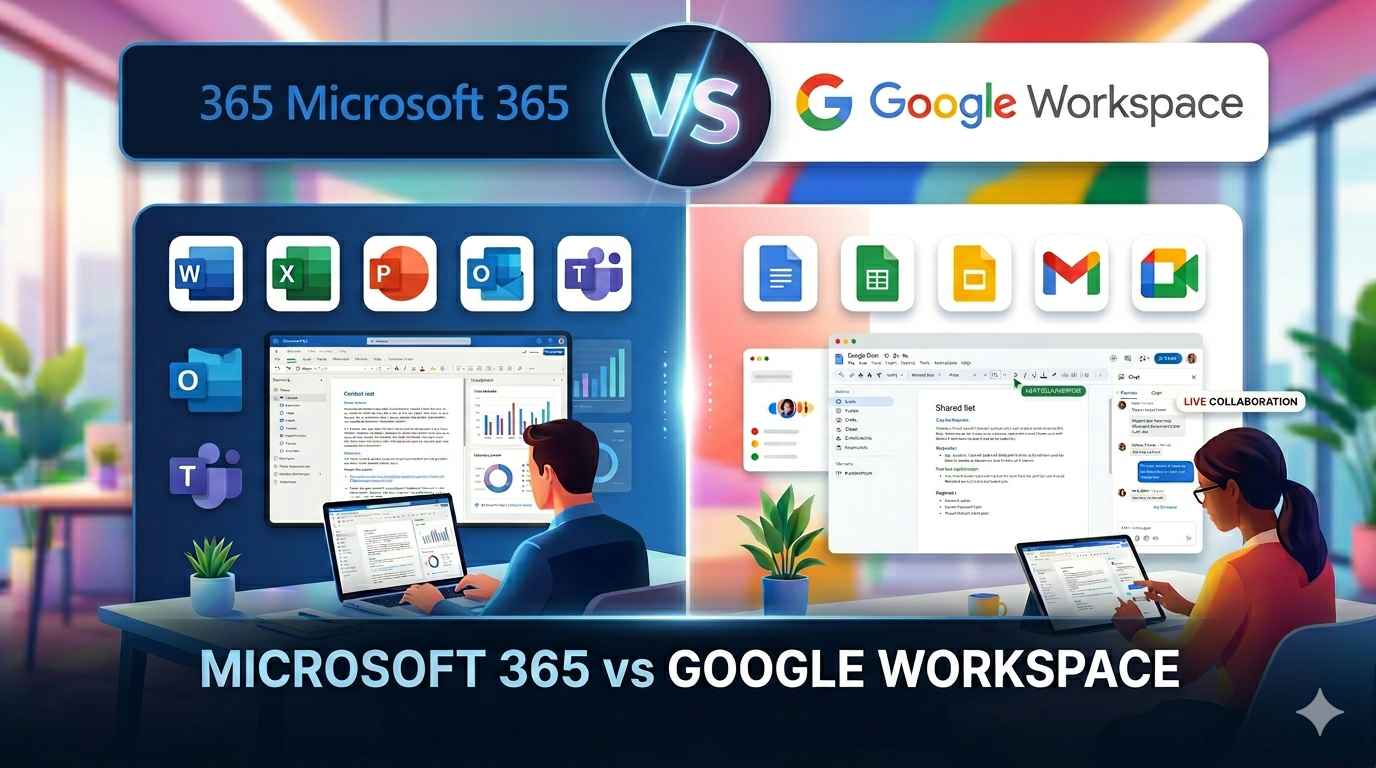
Quick check: Confirm that MFA is enabled for Microsoft 365, Google Workspace, VPN, administrator, and other critical accounts.

When evaluating cybersecurity companies in Dubai, ask whether MFA coverage is included in their assessment.

Email Security and Phishing Training

What it is: Email security combines technical filtering with employee awareness to identify phishing, malicious links, and suspicious attachments.

Why it matters: A convincing fraudulent email can lead to stolen credentials, financial fraud, or malware infections.

Quick check: Ask employees whether they know how to report a suspicious email.

Businesses can also consider email security solutions that strengthen filtering and protection against common email-based threats.

Endpoint Protection

What it is: Endpoint Detection and Response (EDR) monitors computers and other devices for suspicious activity.

Why it matters: EDR can provide greater visibility into potentially malicious behaviour than basic antivirus alone.

Quick check: List all company laptops, desktops, and servers and verify that supported devices have active protection.

This is particularly important for businesses with remote employees or employees using devices outside the office.

Regular Patching

What it is: Patching means regularly updating operating systems, applications and infrastructure to address known vulnerabilities and other issues.

Why it matters: Outdated software can leave known weaknesses unaddressed.

Quick check: Select five business devices and check when their operating systems and key applications were last updated.

Businesses without dedicated IT resources may work with it security companies in Dubai to establish consistent patch-management processes.

Tested Backups

What it is: Backups create recoverable copies of important business information.

Why it matters: Backups can help restore operations following accidental deletion, system failure or a security incident.

Quick check: Ask when your most important data was last successfully restored from a backup.

A backup that has never been tested should not be treated as a proven recovery solution.

 Least-Privilege Access

What it is: Least privilege means giving employees only the access required for their roles.

Why it matters: Limiting permissions can reduce the potential impact of compromised accounts or accidental actions.

Quick check: Select five employees and review whether their current system permissions are still necessary.

Access should also be removed promptly when employees leave or change roles.

 Firewall and Network Segmentation

What it is: Firewalls control network traffic, while segmentation separates systems or environments to limit unnecessary communication.

Why it matters: A properly designed network can restrict access between devices and important systems.

Quick check: Ask your IT team to document the network and identify which systems can communicate with each other.

A firewall should be regularly reviewed rather than simply installed and forgotten.

 Logging and Monitoring

What it is: Logging records important system and security events, while monitoring helps identify unusual activity.

Why it matters: Without visibility, suspicious behaviour may remain unnoticed for longer.

Quick check: Ask where important security logs are stored and who reviews alerts.

As businesses grow, managed monitoring may become part of their broader cyber security for businesses in Dubai strategy.

 Incident Response Plan

What it is: An incident response plan defines what employees and IT teams should do when a security incident occurs.

Why it matters: Knowing who to contact and what steps to take can reduce confusion during an incident.

Quick check: Ask your team: “If a company laptop is compromised today, what do we do first?”

The plan should cover escalation, system isolation, investigation, recovery and communication.

Staff Awareness Training

What it is: Security awareness training teaches employees how to recognise and report common threats.

Why it matters: Employees interact with email, websites, files and business systems every day, making awareness an important part of security.

Quick check: Ask employees how they would report a suspicious email, link or unexpected login request.

Short, regular training can keep security practices relevant without disrupting normal work.

UAE Compliance Context

The UAE’s Federal Decree-Law No. 45 of 2021 provides a framework for personal data protection, while DIFC and ADGM have separate data protection regimes. Dubai’s Electronic Security Center also publishes cybersecurity standards and guidance. Businesses should identify the specific requirements that apply to their industry and operations.

A 15-Minute Self-Check

Answer Yes or No to each question:

Security area

Self-check question

MFA

Is MFA enabled on all critical accounts?

Email

Do employees know how to identify phishing?

Endpoints

Are all company devices protected?

Patching

Are systems and applications regularly updated?

Backups

Have critical backups been successfully tested?

Access

Are unnecessary user permissions removed?

Network

Is the business network properly protected?

Monitoring

Are important security events monitored?

Response

Is there an incident response plan?

Training

Do employees receive security awareness training?

If you answer “No” to several questions, those areas can form the starting point for a security review.

If Your Budget Is Small, Start Here

 All security technology is not required to be put in place at once. Begin with the controls around your most critical accounts, information and operations. 

First, enable MFA on critical accounts. Second, test your backups so you know important data can be recovered. Third, strengthen email protection and train employees to recognise phishing. Fourth, establish regular patching for operating systems and applications.

Once these basics are in place, businesses can progressively improve endpoint monitoring, network security, logging and other controls.

When to Bring in a Specialist

An external security evaluation may also be helpful if a company’s internal security staff does not have the resources or expertise to conduct a comprehensive evaluation. It can also be used for businesses that are scaling, cloud migration, have sensitive data, or are gearing up for customer security needs. 

Before choosing cyber security companies in Dubai, ask what their assessment covers, how findings are prioritised and whether they provide a practical remediation plan.

Similarly, with IT security companies in Dubai, don’t just focus on the products they offer. Ensure to ask for implementation, monitoring, incident response and continuing support. The good assessment will describe needs and why, not a lengthy list of technical findings. 

FAQ

No. Antivirus is only one part of cybersecurity. Businesses also need account protection, email security, patching, backups, access controls, monitoring and employee awareness.

Regular testing of backups should be done in accordance with the importance of the systems and data. The primary goal is to assure the availability of critical information when needed.

It will depend on the activity of your business and the nature of your personal data. The federal law provides for a general regime, and there are jurisdictions like DIFC and ADGM which have their own data protection regime. 

Follow your incident response plan, isolate affected systems where appropriate and contact your IT or security specialist. Do not unnecessarily change anything, which may cause problems in investigation and recovery. 

Start with a Security Assessment

There is no one right way to start cybersecurity, so it doesn’t start with purchasing the costliest security products. It starts with first knowing the existing surroundings and recognizing the gaps that are significant. 

A security assessment can include a review of accounts, endpoints, email, backups, network controls, access permissions, monitoring, and employee practices. Businesses can then develop a prioritised plan in line with their true needs. 

The first step in deciding on professional cyber security companies in Dubai is to get an assessment, to know where your business is and what extra solutions you must invest in. 

Contact Sky Tech today to schedule a security assessment and build a practical cybersecurity plan for your business.

author avatar
Digital Links

Related Posts