


For Dubai SMEs, reliable IT support is essential for keeping employees productive, systems secure and business operations running smoothly. But choosing between an AMC and managed IT support can be confusing. Understanding the difference between managed IT services vs AMC Dubai businesses can help you select a support model that matches your systems, budget and day-to-day requirements.
Quick Answer: An IT AMC covers maintenance and repairs for specified equipment, while managed IT provides ongoing support, monitoring and management. An AMC suits maintenance-focused needs; managed IT suits businesses requiring continuous IT oversight.
What Does an IT AMC Cover?
An IT AMC (Annual Maintenance Contract) is a contract to maintain and troubleshoot specific equipment for a set period of time. The scope of IT AMC in Dubai could be laptops, desktops, servers, printers and networks, including preventive maintenance, repairs and technical support, as per the contract.
Coverage varies by provider and agreement. Some contracts include labour, parts or defined response times, while others may charge separately. AMCs are generally equipment-focused and may exclude cybersecurity, cloud management, Microsoft 365 or continuous monitoring unless specifically included.
What Do Managed IT Services Cover?
Managed IT services take a more comprehensive and proactive approach. Managed service providers continually monitor and manage the IT environment instead of waiting for equipment or systems to have problems.
For businesses using managed IT services in Dubai, support can include network monitoring, endpoint management, cybersecurity, cloud services, backups, Microsoft 365 administration, software updates, user support and troubleshooting.
The provider may also monitor systems for potential problems and address issues before they significantly affect employees. This makes managed IT particularly useful for companies that depend heavily on technology but do not want to maintain a large internal IT team.
Is Your ERP Ready? A Seven-Point Checklist
1. Scope
IT AMC: An AMC normally focuses on the equipment and systems specifically listed in the agreement. Its scope can be narrow or broad depending on the contract.
Managed IT: Managed services generally cover a wider IT environment, including users, devices, networks, cloud platforms, security and business applications.
2. Reactive vs Proactive Support
IT AMC: The traditional AMC model is often maintenance-led. The provider responds when equipment requires troubleshooting, repair or servicing, although preventive maintenance may also be included.
Managed IT: Managed IT is designed around continuous monitoring and proactive maintenance. Potential issues can be identified and addressed before they become major disruptions.
3. Response and Resolution
IT AMC: Response times depend on the agreed contract. Some AMCs provide defined service windows, while others operate during standard business hours.
Managed IT: Managed providers typically establish service-level agreements (SLAs) covering response and, where applicable, resolution targets. Businesses should confirm these terms in writing.
4. How You Are Charged
IT AMC: An AMC is commonly priced as an annual contract based on the equipment, services and coverage included.
Managed IT: Managed IT is commonly structured around a recurring monthly fee based on factors such as users, devices, locations and required services.
The cheaper option depends on the business. Comparing only the headline price of IT services Dubai providers can overlook differences in scope, support hours and exclusions.
5. Who It Suits
IT AMC: An AMC can suit businesses that have relatively stable infrastructure and mainly need maintenance and repair coverage for specific equipment.
Managed IT: Managed IT can suit businesses that rely on cloud applications, remote working, cybersecurity, Microsoft 365, servers and networks and need continuous technical oversight.
Three Business Scenarios
Scenario 1: A 15-Person Office Using Laptops and Cloud Apps
Suppose you have a small office with employees that mostly use laptops, email and Microsoft 365 and cloud-based business applications.
The company may not have vast physical facilities which need to be maintained regularly. In this case, an AMC could offer valuable hardware assistance, but a managed IT service could offer more value if the business requires assistance with user accounts, security, device management, backups and regular tech support.
Scenario 2: A Growing Company Using Microsoft 365 and Cloud Servers
A growing business could have people on the road, relying on cloud services, a number of SaaS applications, and Microsoft 365.
Managed IT services in Dubai can provide ongoing support across users, devices, cloud environments and security. With an increasingly complex IT environment, continuous monitoring can assist the company to ensure that the operations are reliable.
Scenario 3: A Business With Older On-Site Servers and Network Equipment
A company operating older servers, switches, routers and other physical infrastructure may have a greater need for hardware maintenance.
These assets can be covered by an AMC for a targeted coverage. If the company requires any other services, such as cybersecurity, monitoring, cloud management and user support, consider pairing an AMC with managed IT to achieve more comprehensive coverage.
When Should You Combine Both?
An AMC and managed IT services need not be at odds with each other. Some businesses can benefit from managed it services in Dubai for their daily IT management, whilst continuing to have an AMC for any hardware or infrastructure.
Managed IT, for instance, may include employee devices, Microsoft 365, cybersecurity, backups and network monitoring, and a separate AMC may include older servers, printers and specialized equipment, for instance. This may be beneficial if some assets need to be handled through maintenance contracts that are not usually included in the managed-service offer.
Key takeaway: Choose an AMC for equipment maintenance; choose managed IT for ongoing support, monitoring, cloud and security management.
Questions to Ask an IT Provider Before Signing
Whether you choose an AMC or managed support, do not evaluate the contract based only on price. Ask the provider to clearly define what you are paying for.
What are the response and resolution times?
Check whether the agreement specifies response and resolution targets for different levels of IT issues. Confirm whether these apply during business hours or around the clock.
What is excluded?
Ask about replacement hardware, software licensing, third-party applications, emergency visits, cybersecurity incidents and major infrastructure changes. Clear exclusions prevent unexpected charges later.
Is after-hours support available?
If your business operates outside standard working hours, confirm whether emergency support is available and whether it carries an additional charge.
What reports will you receive?
For managed IT, ask whether the provider supplies regular reports covering tickets, system health, security events, backups and other relevant metrics. Reporting gives management visibility into the service being delivered.
How can you exit the contract?
Understand the contract period, notice requirements, termination conditions and what happens to your systems, documentation, credentials and data when the relationship ends.
A transparent provider should be able to answer these questions before you commit.
FAQ
No. An AMC typically offers maintenance and support services for a particular piece of equipment or a system. Managed IT offers comprehensive, continuous management and monitoring of an organization’s technology landscape.
There is no single standard price. Managed IT services in Dubai can vary according to the number of users and devices, locations, infrastructure, cloud services, security requirements and support hours. A provider should assess your environment before giving a meaningful quote.
Yes. When companies need to expand their needs, they can transition from AMC to managed IT. Prior to the switch over, review the current contract and list down the IT environment, including covered assets, so that the new provider can take over seamlessly.
Cloud-based tools still require user access management, device security, backups, updates and technical support. Depending on your needs, these can be handled internally or through it services Dubai providers.
It can, depending on the provider and contract. Some managed service agreements include device and infrastructure support, while others exclude hardware repairs or replacement parts. Always check the scope before signing.
Conclusion
The right IT support depends on your business needs. An AMC can suit companies seeking maintenance for specific equipment, while managed IT provides broader ongoing support, monitoring and management.
For Dubai SMEs, understanding managed IT services vs AMC Dubai options can help you choose the right level of coverage. Assess your systems, support needs, SLAs and budget before deciding.
Looking for reliable IT support in Dubai? Speak with an experienced provider to assess your current infrastructure and determine whether an AMC, managed IT services or a combination of both fits your business.
Related Posts
Cyber Security for Dubai Businesses: A Practical 10-Point Checklist for 2026
Cybersecurity is no longer only a concern for large enterprises. For Dubai SMEs, a compromised…
Cloud Migration in Dubai: Cost, Timeline and a Step-by-Step Plan
Cloud adoption is becoming an important consideration for businesses that rely on on-site servers, ageing…

UAE E-Invoicing Is Coming: Is Your ERP Ready? A Checklist for Dubai Businesses
As UAE e-invoicing approaches, choosing the right e-invoicing ERP Dubai businesses can rely on is…
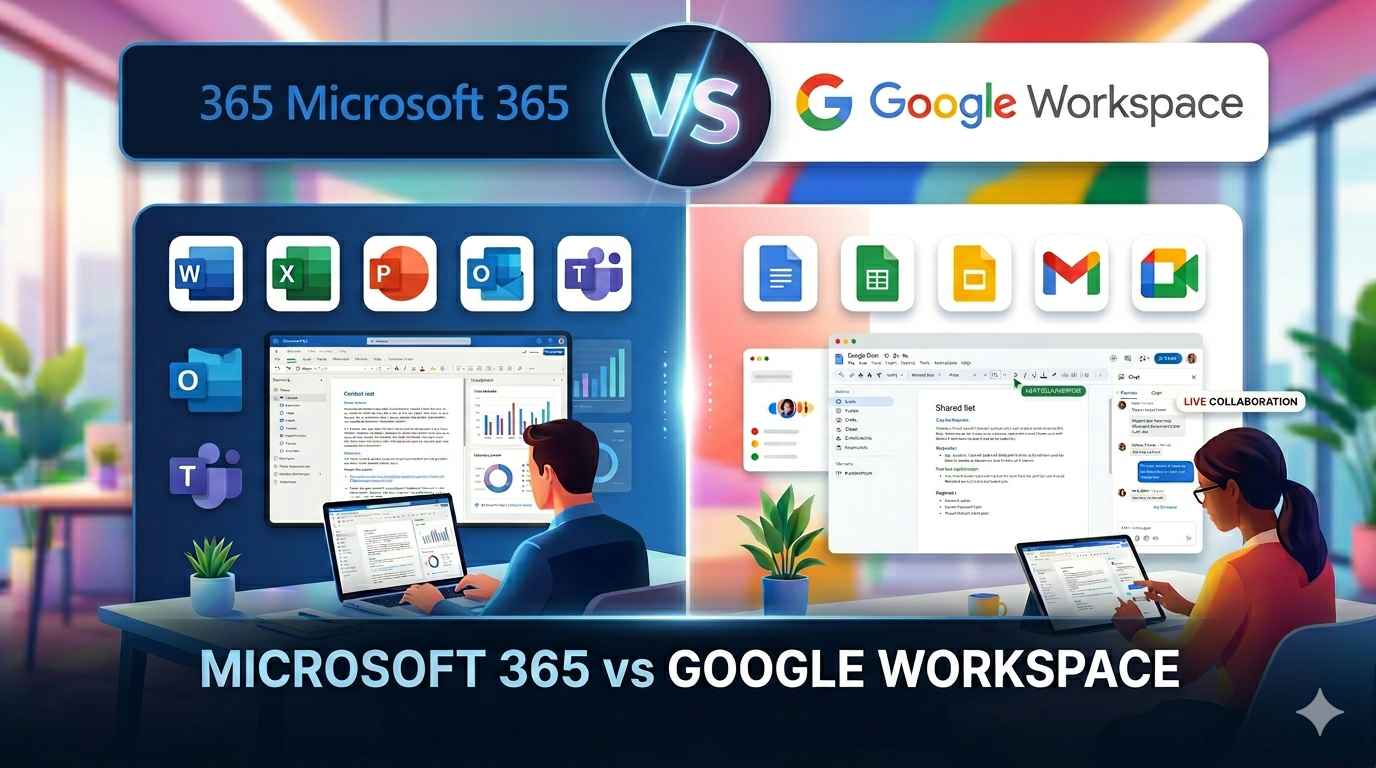
Microsoft 365 vs Google Workspace for UAE Businesses
For UAE businesses already using Windows, Microsoft Office, and enterprise software, Microsoft 365 can offer…