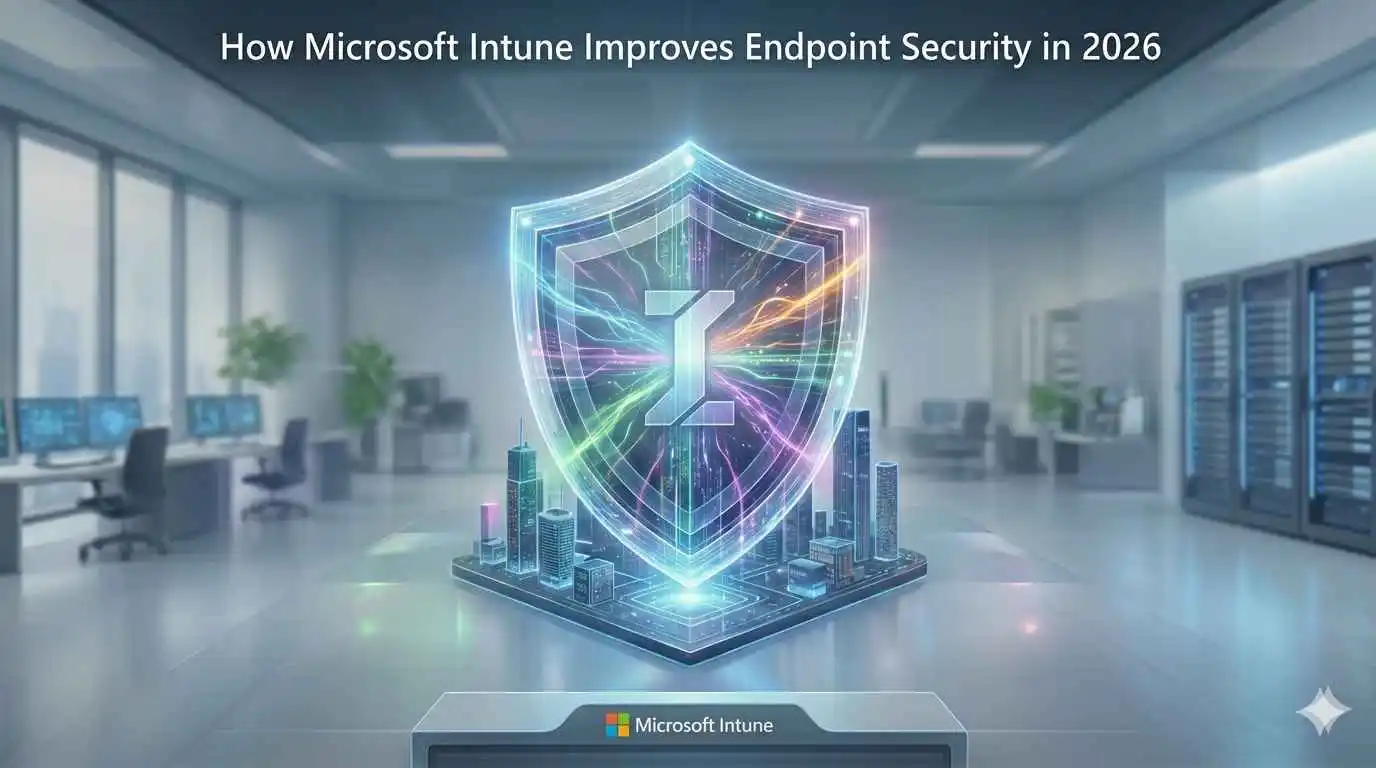
Skytech – How Microsoft Intune Improves Endpoint Security in 2026

Companies are not using just one office, where a handful of desktop computers are connected to one network. These days, staff is using laptops at home, tablets on the way and smartphones at work. Such flexibility is good for the team to remain productive, but it also raises significant security issues. An unprotected device can be a gateway to company information, customer records, passwords and in-house systems being exposed to cyberthreats.

Companies are facing more sophisticated attacks than ever in 2026. Phishing attacks, ransomware, public Wi-Fi networks and unauthorized apps all continue to attack businesses of every size. It is no longer feasible to manage security manually.

That’s where Microsoft Intune comes in handy for today’s business. It provides companies with improved management of devices, users, applications and security policies in a single location. Rather than using dated management approaches, businesses can remotely track and secure the endpoints without slowing their employees down.

At Skytech, we help organizations create a secure digital environment using smart management tools and reliable security practices. We know that businesses must be protected in a way that doesn’t interrupt the productivity of employees. That balance is important as strong security should not impede productivity; it should enable it.

Let’s dig into endpoint protection, why businesses are moving towards centralized systems, and how companies can enhance their security by gaining visibility and control over all the connected devices. In this blog, you will learn why endpoint security will become even more important in 2026.

Why Endpoint Security Matters More in 2026

Cybercriminals are becoming more sophisticated, faster, and more organized. They no longer target just big corporations. Small and medium-sized businesses are also likely targets as they still use weak passwords, have outdated software, and unmanaged devices.

Every connection creates a potential entry point for attackers. If there are no controls, then it’s possible that a business will not realize that something has been happening until the damage has been done.

The rise of remote and hybrid working has also impacted the way IT teams work. Today, traditional office-based security systems are no longer sufficient as devices are continuously moving outside of the company’s network. Businesses require a solution that can detect and protect any endpoint at any time, while employees are on the go.

This growing demand has increased the importance of Endpoint Management Software. Businesses need to have all security policies, compliance monitoring, device updates and threat reduction managed from a single place, rather than having to do it all manually.

A centralized approach enables businesses to respond quicker in the event of any problems. A compromised device can be isolated remotely, data from the company can be deleted, or more stringent security policies can be implemented immediately after the device is compromised. This can help to stop bigger security breaches.

Understanding Modern Device Security

To many, endpoint security is synonymous with antivirus. In fact, it’s much more than that in the modern world of security. Managing device access, application permissions, operating system updates, user permissions and data sharing rules are all important management aspects businesses need to manage.

Businesses also must have visibility of all the devices connected to their systems. If they don’t see it, they can’t find it. Real-time monitoring and automated security actions are essential for modern businesses.

That’s where Cloud Device Management has come in very handy. Cloud-based management and endpoint security platforms can secure and manage endpoints without relying on physical office servers. This way, IT teams can be flexible and access management tools easily from remote locations.

Systems are needed to ensure businesses are able to automatically maintain standards for passwords, encryption and device policies. Manual monitoring has the potential to lead to errors and missed security issues.

How Microsoft Intune Strengthens Endpoint Security

Centralized control is one of the most significant benefits of Microsoft Intune. The IT team can view and control devices, applications and access settings on company devices and employee-owned devices from a single dashboard. This makes it easier to visualize within the department.

Businesses can mandate that employees log in with several factors, use encryption, block access to risky applications, and block access to sensitive files on unsecured devices.

One of the other huge advantages is automated compliance monitoring. If a device doesn’t pass security checks, it can be automatically restricted until the issue is resolved. This allows non-vulnerable devices to bypass company systems and decreases risks in the company’s security systems.

Intune Device Management also simplifies application management. With remote deployment of approved apps, the company can remove risky apps and ensure that the workers are running the latest versions of software. This helps eliminate security holes due to legacy apps.

Intune also has remote troubleshooting capabilities. If a device is lost or an employee leaves the organization, IT staff can remotely wipe company data without impacting personal files. This is especially useful for companies that allow employees to use personal devices for work.

Conditional access policies are also available for organizations. These policies govern access to business resources based on a user, device and location. For example:

  • Access can be blocked from unknown devices
  • Employees may need additional verification outside office locations
  • If a device is jailbroken/rooted, it cannot be granted access.
  • Devices that don’t have security updates can be restricted
  • App controls can be used to protect sensitive files.

These controls help limit exposure to unauthorized users and enhance the overall security of endpoints.
The Role of Microsoft Endpoint Manager

It’s hard to manage multiple devices if businesses rely on different tools for security, updates and application control. This can lead to delays and confusion for IT teams. One management system makes it easy!

Microsoft Endpoint Manager can help businesses unify device management and security operations in a single environment. As a result, IT administrators can manage Windows devices, Android smartphones, iPhones, tablets and laptops all in one place, eliminating the need to manage them on multiple platforms.

Another major benefit is its seamless integration with Microsoft services already used by many organizations. Businesses running Microsoft 365 can enjoy enhanced security management due to improved collaboration between user accounts, security access controls and device policies.

Flexibility is a key requirement of any modern business. Employees have access to a variety of operating systems and devices that are based on their job function. A centralized management platform allows organizations to maintain security standards without sacrificing employee productivity.

Benefits Businesses Experience After Implementation

Some common benefits are:

  • Increased visibility of connected devices.
  • Immediate action in response to suspicious behaviour
  • Enhanced security for remote employees.
  • Lower chances of data breaches.
  • Minimized risk of data leaks.
  • Easier application deployment
  • Stronger compliance management
  • Faster employee induction process
  • Consistent security policies

Internal IT teams are also relieved from the burden of manually managing devices and security tasks. Administrators can automate many tasks, avoid manual checking of individual devices, and concentrate on tasks with greater value.

A well-designed Microsoft Intune Solution enhances user experience, as well. Staff can easily access company resources without any difficult manual configurations on a regular basis when changing devices or locations.

Here automation is crucial. Automatic updates to the device, security patches, compliance checks and more can be done automatically in the background. This minimizes downtime while improving protection against emerging threats.

Enabling Hybrid and Remote Workforces

The hybrid work model is no longer a short-term measure. For numerous companies, it has become a constant companion in their daily activities. Staff want access to work systems to be secure, at home, on the move and in the office.

This flexibility raises problems for companies wanting to safeguard delicate data. Office-based security solutions are not sufficient to secure today’s distributed organizations.

For organizations, Microsoft Intune Services simplifies the creation of a secure work environment for remote employees without making their work a difficult task. IT teams can remotely set up devices, track compliance, and safeguard company information from anywhere.

Businesses can also respond swiftly to emergencies with remote security management. In a case of a stolen or suspicious activity on a laptop, administrators can make decisions as soon as the theft or suspicious activity is detected, rather than when the laptop is returned to the office.

All employees are provided the same level of safety, irrespective of their place of work. This results in increased protection and minimisation of vulnerabilities due to varying device management procedures.

Why Businesses Need a Long-Term Security Strategy

Waiting until after a breach can lead to financial losses, operational downtime, damaged customer trust, and legal issues. Strong endpoint management improves visibility, supports compliance, and gives businesses better control over connected devices. A robust endpoint management solution brings visibility, compliance and enhanced control of attached devices.

Cybercrime is constantly changing, and businesses must be ready to adapt. The security requirements in today’s work environment are far greater than what can be achieved by static security models. Businesses need flexibility, scalability, and the ability to adapt to evolving security challenges.

That’s why, businesses are increasingly opting for endpoint management platforms that give them better control over their endpoints rather than relying on isolated tools and manual monitoring practices.

Why Choose Us

We understand that every business has unique operational requirements, staffing structures, and security concerns. Some companies need some help in managing remote teams, and others must implement more robust compliance measures. We’re not providing one-size-fits-all solutions, rather we’re creating practical, security solutions that are appropriate for real environments.

Our team collaborates closely with clients to enhance endpoint visibility, access control and streamline the management of devices. We assist businesses put in place systems that ensure business data remains safe and secure while maintaining workers productive and connected, from any location and on any device.

We also offer ongoing support as endpoint security is not a simple job done and dusted. Threats evolve rapidly, which is why businesses need a long-term security system that is proactive and well managed. We focus on building long-term reliability, smoother operations, and practical security improvements that support business growth.

Conclusion

Endpoint security is becoming a crucial aspect of today’s business operations. As employees use diverse devices in varying locations, organizations need greater visibility, stronger control, and smarter protection across all endpoints.

Older security systems that just cover the office network are no longer viable for businesses. Centralized management, automated compliance, and remote security capabilities are essential for today’s workplace and a response to evolving threats.

With the proper management strategy, companies can minimize vulnerabilities, increase productivity, and make digital workplaces safer for employees and customers.

Want to enhance endpoint security and ease up device management for your enterprise? With their expertise in both hardware and software, Skytech can help you create a secure and scalable environment that meets your operational needs, equipped with cutting-edge management solutions. Reach out to us today to discover how to bolster your security systems, safeguard company data and equip your staff with smarter endpoint management solutions. Call us at +971 50 7437958 to book a consultation with us today.

Related Posts